

A foundational tenet of my personal philosophy is the great adage “everything happens for us”. It makes possible a perspective of welcoming and curiosity on all happenings. So, of course, I saw my ankle injury as a real godsend and an invitation to be still. My recovery was going beautifully, but to ensure ease on the following leg of my teaching tour, I chose to spend three nights in the Zen Monastery in San Francisco. It was heavenly being in the calm, entirely spotless, orderly building, writing in the sun and enjoying their simple, clean vegetarian food in the courtyard. The place had a very serious feel given its established ritual culture and protocol. Despite warm assurances that I was welcome to sit in zazen with them at any of their sessions, I elected to be quiet in the courtyard instead, and I left there feeling quite refreshed.
After that I arrived, with 13 Mentorship graduates from five countries, at the stunning Sudeoksa Temple complex in South Korea. The trip was beautifully conceived by Yanan Kim, who left Korea for Sydney when she was 18. We took a bus for the two and a half hour journey out of Seoul and arrived in a kind of oasis.
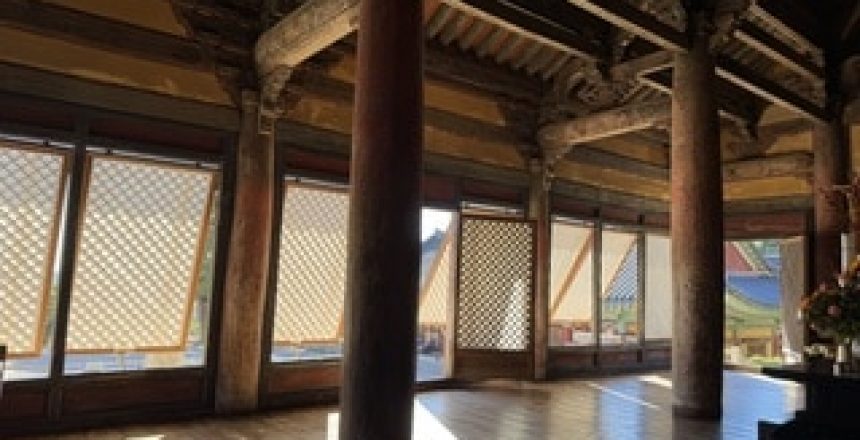
There’s something unmistakably powerful about places where energy has been cultivated daily for centuries. Sudeoksa temple has been in continuous daily use since it was built in 1308, and the result is that time and psyche are transformed. For example, the temple schedule felt easy to handle. We woke with the drums at 3:00AM, walked to the temple in advance of the 3:20AM chanting and prostrations; at 4AM walked down the hill to sit with the extraordinary 21 year veteran nun for singing bowl meditation, 5:45AM breakfast, 6:30AM ritual tea ceremony, 11:35AM lunch, 5:15PM dinner; at 6PM drums and gongs summoned for the 6:20PM meditation, chanting and prostrations, 7:30PM to bed, and our class sessions filled in the gaps.
I didn’t teach the first two days and had plenty of solo time in the temple. I was staggered to find after the profound meditation sessions in the 14th century building that I had been sitting for between 90 minutes and three hours each time. I kept going back for more, feeling more clear, and even a new, higher baseline of happiness.
It made me realize on a completely new level the importance of tuning one’s living space and making time—no matter how busy—for spending time in stillness.
The monks and the nun there exemplified this, always smiling, none of it forced or fake. The abbot, a man in his mid-80s—who chanted, by the way, like an old and gnarled blues master—entered the meals room with the monks behind him, all beaming. Each time he’d stop near our table for over a minute, and as nearly all of us didn’t speak Korean, he’d look at us and wave two bouncy fists held in front of his chest, with loving enthusiasm. He didn’t leave the room without chatting with the kitchen staff, still beaming.
The mission of these temple folk is to hold the clean frequency of the space behind the mind, and live in it. Their cultivated presence informs all wei qi, and therefore they perform great service to all beings. The public in the region understand this very well; we witnessed them supporting the temple with great reverence, sending it, among other things, the finest tea and the finest pears.
I’m inspired by this, and have been taking more time for absolute stillness. It’s beautiful, and as it turns out, it’s an act of service at the same time.
Ann Cecil-Sterman
Sudeoksa Temple
14 October 2026